
The Great Sphinx of Giza: Guardian of Egypt’s Ancient Mysteries

Towering silently on the Giza Plateau, the Great Sphinx of Giza is one of the world’s most iconic monuments. With the body of a lion and the head of a human, this colossal limestone statue has stood guard at the edge of the desert for more than 4,500 years. Facing directly east, the Sphinx greets the rising sun each morning, embodying both the power of the pharaoh and the mysteries of ancient Egyptian civilization.
Measuring over 73 meters long and 20 meters high, the Great Sphinx is not only the largest monolithic statue in the world but also one of the most enigmatic. Scholars debate who built it, what it symbolizes, and why it was carved in such a monumental form. While most historians attribute its construction to Pharaoh Khafre of the Fourth Dynasty, the surrounding context—like the nearby Great Pyramids of Giza and the Valley Temple in Giza—helps frame its role as guardian of a royal landscape.
For centuries, the Sphinx lay buried under the sands of time, leaving only its head visible. Today, after extensive excavations and restorations, visitors can marvel at its full grandeur, standing against the backdrop of the pyramids. Before or after your visit, consider exploring Cairo’s treasures at The National Museum of Egyptian Civilization or the heritage-rich Coptic Museum.
The Great Sphinx of Giza – An Introduction to Egypt’s Oldest Guardian
The Great Sphinx of Giza in Egypt is believed to have been built during the reign of Pharaoh Khafre, around 2500 BC. Carved from a single mass of limestone directly from the Giza bedrock, the statue represents strength, wisdom, and divine kingship. Its leonine body symbolizes power and dominance, while the human face likely modeled on Khafre himself reflects intelligence and authority.
Unlike the pyramids, which served as tombs, the Great Sphinx had a more symbolic and spiritual role. Positioned along the approach to Khafre’s pyramid and valley temple, the Sphinx acted as a guardian of the necropolis, warding off spiritual dangers and protecting the pharaoh’s eternal resting place across the Nile River horizon.
Historical Origins and Construction of the Great Sphinx
Pharaoh Khafre’s Legacy
Most Egyptologists agree that the Great Sphinx was carved during Khafre’s reign in the Fourth Dynasty. Its alignment with Khafre’s pyramid complex and the architectural connection with his valley temple strongly support this theory. The craftsmanship also matches the style and scale of other Fourth Dynasty works—including monuments across greater Cairo.
Carving and Techniques
The statue was sculpted directly from limestone bedrock using copper chisels and stone hammers. The extracted blocks were repurposed for nearby temples. Evidence suggests the builders began with the head and worked backward, leaving the body in proportion to the natural shape of the bedrock. For a broader look at Old Kingdom funerary landscapes, compare with nearby Saqqara Necropolis.
Restoration Efforts in Antiquity
The earliest known restoration dates back to Thutmose IV, who erected the famous Dream Stele between the Sphinx’s paws. According to the inscription, Thutmose fell asleep beneath the Sphinx, and the deity appeared in a dream, promising him kingship if he cleared the sands engulfing the statue.
Symbolism and Meaning of the Great Sphinx
The Dual Nature of the Sphinx
The Sphinx combines the body of a lion—symbol of strength and guardianship—with the head of a man, representing intelligence and divine kingship. This union embodied the pharaoh as both a powerful ruler and a wise protector.
Solar Alignment and Worship
Facing east, the Sphinx aligns with the rising sun, linking it to the solar cult of Ra. Many scholars believe it functioned as a cosmic symbol of rebirth.
Alternative Theories
Some alternative researchers suggest the Sphinx predates Khafre, citing erosion patterns that may indicate water damage from heavy rainfall thousands of years earlier. Others link its construction to celestial alignments. While mainstream archaeology remains cautious, these theories add to the Sphinx’s allure as an eternal riddle.
Architectural Features of the Great Sphinx of Giza
Dimensions and Structure
- Length: 73 meters (240 feet)
- Height: 20 meters (66 feet)
- Head: 4 meters wide, adorned with a royal nemes headdress
- Paws: Extend over 15 meters forward
- Material: Natural limestone bedrock
Missing Nose and Beard
The most noticeable damage is the missing nose. Fragments of the Sphinx’s ceremonial beard were discovered and are now displayed in major museums.
Surrounding Structures
The Sphinx is flanked by temples built from blocks quarried during its construction, including the Sphinx Temple and Khafre’s Valley Temple—engineering feats representative of the Old Kingdom.
Rediscovery and Excavation of the Great Sphinx
For centuries, the Sphinx was buried beneath desert sands up to its neck. Only its enigmatic head peered above the dunes. Excavations in the 19th and 20th centuries revealed the full body and surrounding temples. Conservation programs continue to this day to protect the monument from erosion and pollution. If you want to time your visit well, review the best time to visit Egypt and practical Egypt travel tips.
Visiting the Great Sphinx of Giza Today
Location and Access
The Sphinx lies on the Giza Plateau, adjacent to the Great Pyramid and Khafre’s pyramid—just outside central Cairo. If you’re flying in, this guide to Cairo International Airport (CAI) is handy for navigating terminals and transport.
What to Bring
Pack for sun, sand, and crowds. A hat, sunscreen, water, and comfortable shoes are essential—check this seasonal Egypt packing list before you go.
Nearby Museums
Combine your Giza day with a visit to The National Museum of Egyptian Civilization or the beautifully curated Coptic Museum for wider context.
Experiences and Tours
Many guided tours include the Sphinx as part of a Giza Plateau package, often combining the pyramids, panoramic viewpoints, and museums. If you’re planning a longer itinerary, consider a focused circuit that starts in Cairo/Giza and continues south via the Nile on programs like the 7 Day Egypt Tour, the classic 6 Days Egypt Tour, or the blended 8 Days Egypt Trip Package.
AIDA Breakdown for the Great Sphinx of Giza
Attention
A colossal guardian carved in stone, half-lion and half-human, staring across the desert for 4,500 years.
Interest
The Great Sphinx of Giza isn’t just the world’s largest monolithic statue—it’s a symbol of divine kingship, ancient mysteries, and forgotten legends housed amid Cairo’s monumental landscape.
Desire
Imagine standing at its massive paws, where pharaohs once prayed for power and where dreams were said to foretell kingship. The aura is both humbling and awe-inspiring.
Action
Don’t just admire it in photos—plan your day across Giza, from the Great Pyramids to the Valley Temple, and cap it with museum time for context.
Frequently Asked Questions About the Great Sphinx of Giza
1. Who built the Great Sphinx of Giza?
Most Egyptologists believe Pharaoh Khafre of the Fourth Dynasty built the Sphinx around 2500 BC.
2. What does the Great Sphinx represent?
It symbolizes strength, wisdom, and divine kingship, blending a lion’s body with a human head.
3. Why is the nose of the Sphinx missing?
The nose was destroyed in antiquity; the exact cause remains unknown.
4. How old is the Great Sphinx?
Mainstream archaeology dates it to 2500 BC, though alternative theories suggest it may be older.
5. Can you go inside the Great Sphinx?
No. While there are small tunnels and chambers beneath, they are closed to the public.
6. What is the Dream Stele of the Sphinx?
An inscription placed by Thutmose IV between the paws, recording his dream that led to kingship.
7. Is the Great Sphinx open at night?
Yes, visitors can attend the evening Sound and Light Show at the Giza Plateau.

Dahshour: Exploring Egypt’s Hidden Gem of Ancient Pyramids and Timeless Mysteries
Discover Dahshour, home to Egypt’s Bent and Red Pyramids. Learn its history, how to visit, and why Dahshur is a must-see ancient site near Cairo.

Meidum Pyramid: The Mysterious Transition between Step and True Pyramids
Explore the Meidum Pyramid, Egypt’s first true smooth-sided pyramid, its dramatic collapse, unique design, and its crucial role in the evolution of pyramid construction.
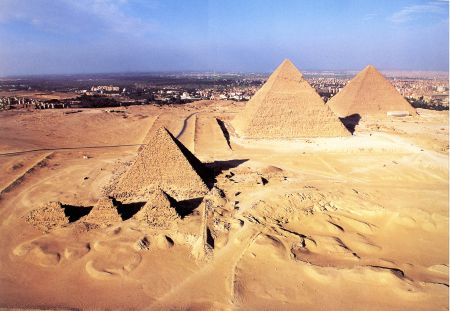
Giza City – Where Egypt’s Ancient Glory Meets Urban Pulse
Giza City is more than just a home to the pyramids; it’s a living chronicle of Egypt’s journey from ancient glory to modern resilience.
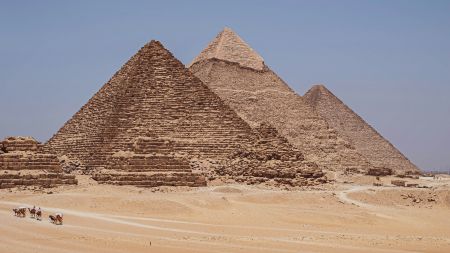
the Mysteries of the Great Pyramids of Giza : A Timeless Marvel of Ancient Egypt
The Great Pyramids of Giza are more than stone structures — they’re timeless beacons of civilization, spirituality, and ingenuity.
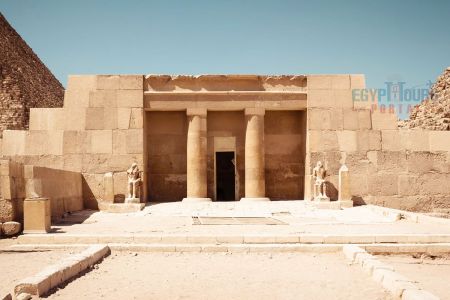
The Secrets of The Valley Temple in Giza
The Valley Temple of Khafre isn’t just an architectural marvel—it’s a testament to the ancient Egyptians’ spiritual depth, technical brilliance, and unrelenting pursuit of eternity.
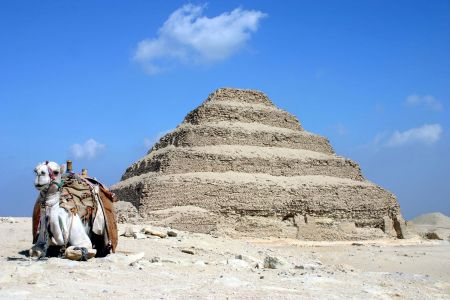
Sakkara Necropolis : The Eternal Gateway
Sakkara Necropolis isn’t just a destination—it’s a portal into the very soul of ancient Egypt.
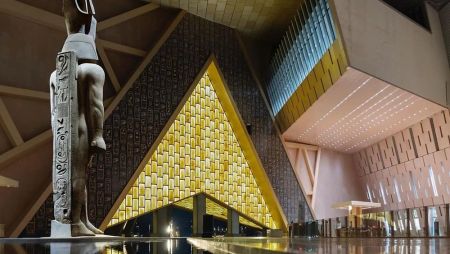
The Grand Egyptian Museum
The Grand Egyptian Museum stands as a triumph of vision, architecture, and cultural preservation. By blending ancient majesty with modern innovation, GEM redefines what a museum can be.
Our Partners
Our Awesome Partners